The roar of the crowd, the crack of the pads, and the sheer terror in a quarterback's eyes as a relentless defensive line collapses the pocket – these are the hallmarks of truly dominant NFL defenses. While many legendary units have etched their names into gridiron lore, few have achieved the mythical status and revolutionary impact of the New York Jets' "Sack Exchange." This formidable quartet, featuring Abdul Salaam, Joe Klecko, Marty Lyons, and Mark Gastineau, redefined defensive line play in the late 1970s and early 1980s, leaving an indelible mark on the sport. Their relentless pursuit of opposing signal-callers wasn't just entertaining; it was so effective it fundamentally changed how the NFL recorded statistics, officially recognizing the sack thanks in part to their prowess. Dive with us into the heart of this legendary group, with a special focus on the incomparable Joe Klecko, to understand what made the New York Sack Exchange a force of nature.
The Genesis of a Groundbreaking Defense
The New York Jets franchise boasts a rich history of defensive excellence, from the Super Bowl III-winning efforts of defensive ends Gerry Philbin and Verlon Biggs to the stout 2009 squad that clawed its way to the AFC Championship. Yet, when fans and analysts recall the most fearsome and disruptive defensive units in Jets history, one name consistently rises above the rest: the New York Sack Exchange. Emerging from the late '70s, this defensive line transformed a struggling Jets team into legitimate contenders, proving that defense truly wins championships.
What made this unit so special? It was a perfect storm of talent, tenacity, and a shared desire to wreak havoc. The 1981 season stands as a testament to their collective power, as they combined for an astonishing 53.5 sacks – a franchise record that still resonates today. This relentless pressure propelled the Jets to multiple playoff appearances, signaling a new era of competitiveness for the franchise. The impact of their play was so profound that it extended beyond mere wins and losses; their consistent ability to terrorize quarterbacks played a significant role in the NFL's decision in 1982 to officially track sacks as a statistical category. Before the New York Sack Exchange, a quarterback takedown was merely an unofficial tally; afterward, it became a fundamental measure of defensive dominance, a legacy few units can claim.
Joe Klecko: The Quintessential Defensive Lineman
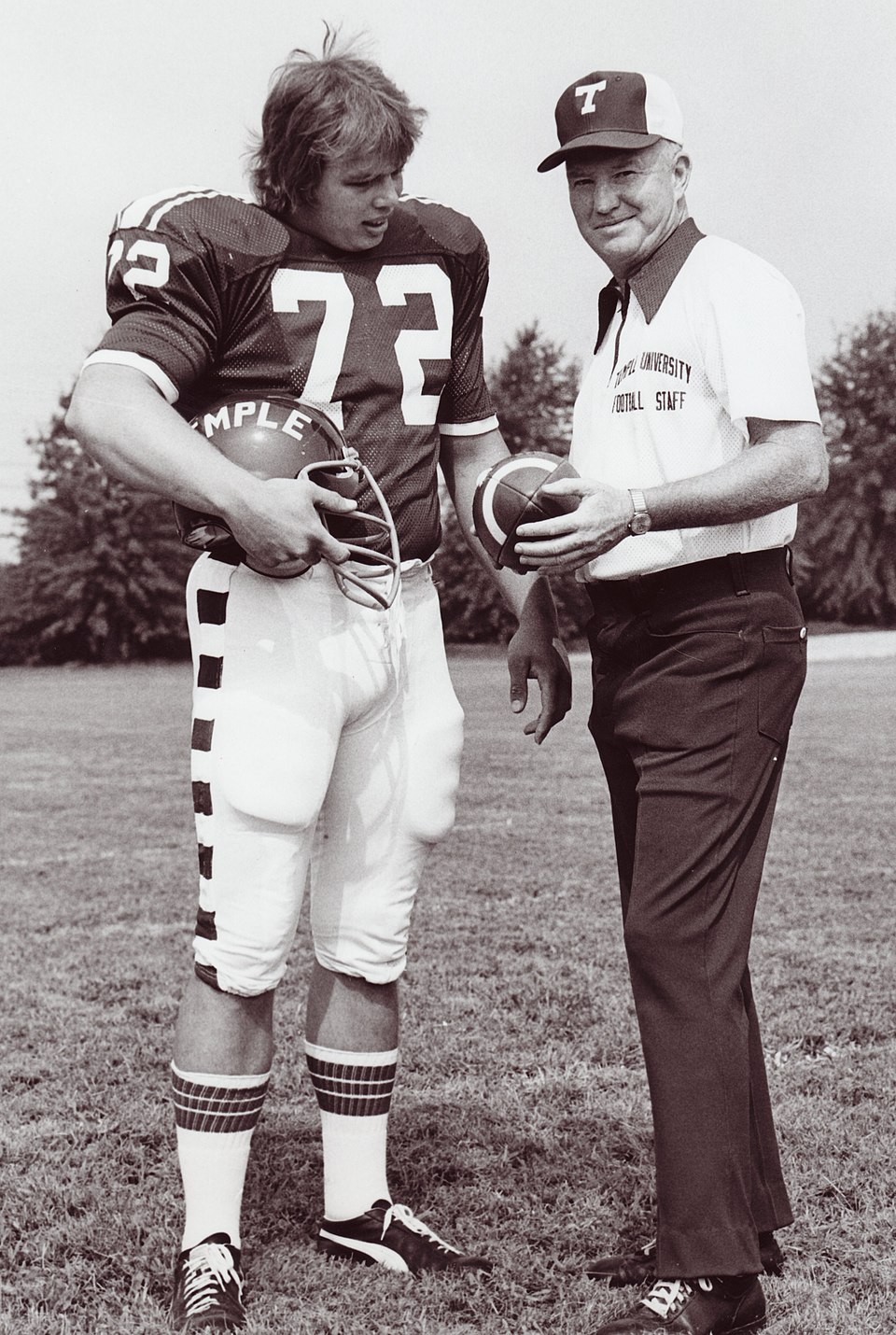
At the heart of the New York Sack Exchange stood Joe Klecko, a player whose name is synonymous with versatility and unyielding power. Drafted by the Jets in 1977, Klecko quickly established himself as a dominant force, setting a team record with eight sacks in his rookie season. But his journey to NFL stardom began long before, rooted in a remarkable athletic background that included winning collegiate club boxing heavyweight titles at Temple University, where he also led the football team in tackles for three consecutive seasons. This combination of raw strength, disciplined technique, and an innate killer instinct made him a nightmare for opposing offensive linemen.
Klecko’s true legend, however, is built on an unparalleled feat of adaptability. Over his 11-year tenure with the Jets, he didn't just play all three positions on the defensive line—defensive tackle, defensive end, and nose guard—he excelled at each. He is, to this day, the only player in NFL history to make the Pro Bowl at all three positions. This incredible versatility speaks volumes about his understanding of the game, his physical prowess, and his unwavering commitment to team success. Whether anchoring the line as a nose guard, rushing the passer from the interior as a defensive tackle, or bending the edge as a defensive end, Klecko was a relentless disruptor. His ability to dominate from any spot on the line was a foundational element of the New York Sack Exchange's effectiveness, allowing defensive coordinator Joe Gardi to deploy a constantly shifting, unpredictable attack.
Abdul Salaam: The Unsung Anchor
While Joe Klecko, Mark Gastineau, and Marty Lyons often grabbed the headlines with their flashy plays and larger-than-life personalities, Abdul Salaam was the quiet, gritty engine that powered the New York Sack Exchange. The first member of the legendary line to join the Jets, Salaam (who changed his name from Larry Faulk in 1977, a year after being drafted) embodied a physical, no-nonsense style of play that belied his name, meaning "servant of peace."
The Jets selected Salaam from Kent State University specifically to bolster a run defense that had ranked as the league's worst. At 6'3" and 262 pounds, he brought the necessary size and strength to immediately make an impact at defensive tackle. Though he might have lacked the flamboyant celebrations of some of his teammates, Salaam was incredibly effective as a run-stopper, consistently clogging lanes and shedding blocks. He was also a potent, though unofficial, pass rusher, recording seven sacks in 1981 alone. His career also included four fumble recoveries, showcasing his knack for creating turnovers. A prime example of his understated impact came in a crucial November 1981 victory against the Miami Dolphins. With the Jets trailing, Salaam delivered a critical third-and-goal stop on a rushing attempt, preventing a score that would have likely put the game out of reach. While quarterback Richard Todd went on to lead the game-winning drive, that victory simply wouldn't have been possible without Salaam’s foundational work in the trenches. He was the vital, steadfast component that allowed the others to shine, proving that every piece of the New York Sack Exchange was indispensable.
The Chemistry and Controversy of the Sack Exchange
Beyond individual talents, the true magic of the New York Sack Exchange lay in its potent chemistry, a fascinating blend of contrasting personalities that somehow coalesced into an unstoppable force. Mark Gastineau was the flamboyant, sack-dancing showman, a pure pass-rushing phenom. Marty Lyons brought a fierce intensity and an unflinching toughness. Joe Klecko was the versatile, cerebral leader, a technician with brute strength. And Abdul Salaam was the quiet, consistent rock, doing the dirty work without complaint. This dynamic, while incredibly effective on the field, was not without its internal friction, famously depicted in ESPN’s "30 for 30" documentary as a relationship akin to "Axl and Slash," full of both brilliance and bickering. For more on the complex internal dynamics of this legendary squad, consider reading Beyond the 30 for 30: The Contentious History of the New York Sack Exchange.
Yet, despite any personal differences, when they stepped onto the field at Shea Stadium – a dated baseball venue that became a "football incinerator" for opposing offenses – they were a single, terrifying unit. The dirt infield, often a "dust bowl" or worse, only added to the rugged, intimidating atmosphere. This environment amplified their already fearsome presence, allowing them to collectively demoralize offensive lines and torment quarterbacks. Their diverse skill sets complemented each other perfectly: Salaam and Klecko could stop the run and generate interior pressure, while Gastineau and Lyons could disrupt the edge. This multi-faceted attack meant there was no weak link, forcing offenses into impossible decisions. The collective pressure from the New York Sack Exchange didn't just result in sacks; it led to hurried throws, fumbles, and demoralized opponents, showcasing how diverse personalities, when channeled correctly, can create an unparalleled competitive edge.
A Legacy That Echoes Through Time
The impact of Joe Klecko and the New York Sack Exchange transcends their impressive statistics and playoff appearances. They didn't just dominate; they revolutionized the game. By forcing the NFL to officially recognize the sack, they cemented their place as pioneers who reshaped how defensive effectiveness is measured. Their influence on defensive line play is still felt today, as teams continue to seek versatile, athletic linemen who can disrupt both the run and the pass.
Klecko's unprecedented achievement of making the Pro Bowl at all three defensive line positions serves as a lasting testament to his individual brilliance and epitomizes the ideal of a modern defensive lineman. His legacy, along with those of Gastineau, Lyons, and Salaam, set a benchmark for defensive dominance that future Jets teams would aspire to. For more insights into how these legends permanently altered the NFL landscape, explore The New York Sack Exchange: Jets Legends Who Revolutionized NFL Defense. They taught the league that a cohesive, ferocious defensive front could carry a team, dictate the pace of a game, and even change the rules of engagement. In an era often defined by offensive stars, the New York Sack Exchange proved that defense, executed with unbridled aggression and strategic brilliance, could be just as, if not more, captivating and impactful.
The story of Joe Klecko and the New York Sack Exchange is more than just a chapter in Jets history; it's a cornerstone of NFL lore. Their unique blend of individual talent, collective chemistry, and sheer dominance created a defensive unit that terrorized opponents, thrilled fans, and fundamentally altered the game. Their legacy endures as a powerful reminder of what can be achieved when four extraordinary talents unite with a singular purpose: to relentlessly pursue victory, one devastating sack at a time.